
In June, the world breathed a sigh of relief with the signing of a peace memorandum between the US and Iran. Oil prices fell back to pre-war levels and the world looked at getting back to the “Old Normal.” This relief was short lived, as hostilities reignited weeks later, leading to a second energy price shock.
Financial markets absorbed the difficult news, reset expectations, and continued to move forward. US equities finished the quarter with modest gains, once again carried by corporate earnings that exceeded expectations, even as bonds gave ground to rising yields.
Corporate America continues to be a bright spot. Second-quarter earnings were the strongest since 2021 by nearly every measure. The share of companies beating estimates was the highest in five years, revenue growth was the fastest since late 2021, and analysts raised their estimates. Much of the upside is coming from technology companies benefiting from AI-related investment, but energy, materials, industrials, and financials have contributed as well. AI (artificial intelligence) investment now accounts for about one-fifth of US GDP (Gross Domestic Product) growth in the past year. (Source: www.jpmorgan.com) High-quality businesses are demonstrating, once again, that they can protect margins and grow through a difficult backdrop.
The policy signals we flagged at midyear became policy. On September 16, the Federal Reserve raised its target rate by a quarter point to 3.75% to 4.00%, its first increase since 2023 and a unanimous decision. Chairman Warsh has been explicit that price stability now takes precedence over the Fed’s other mandate of full employment. The committee’s updated projections point to one more increase before year-end, with rates holding near 4% through 2027 rather than the cuts markets had penciled in earlier this year. (Source: www.federalreserve.gov)
Within our portfolios, our emphasis remains on resilience and discipline. The third quarter was a textbook example of why we do not rely on stocks and bonds alone: rising yields pressured bond prices at the same time they weighed on equity valuations, and the two asset classes offered each other less protection than in a typical year. Our allocations to alternatives and hedged equity were built for precisely this environment, and again this quarter they continued to serve their purpose of broadening diversification and dampening the swings that headline-driven markets produce. Heading into Q4, in our view, we’re still where we want to be positioned with our broad views on investments.
Favorability Scale
The sliding scales below are meant to represent HFM’s current assessment of favorability of the market landscape in various investment areas as of the most recent quarter end. Our investment committee is looking to communicate to you a complicated thought process as simply as possible. The favorability scale considers the following factors: Current Yield, Growth, Value, and Market Conditions.
The information contained here should not be construed as a recommendation to purchase or sell any particular security or an assurance that any particular security held in a portfolio will remain in the portfolio or that a previously held security will not be repurchased. Securities discussed may not represent a portfolio’s specific or entire holdings. It should not be assumed that any security transactions or holdings discussed have been or will prove to be profitable or that future investment decisions will be profitable or will equal or exceed the investment performance of the securities or portfolios discussed. Market observations and forecasts reflect the firm’s views as of the quarter just ending, are based on information believed reliable, and are subject to change. Forecasts and forward-looking statements involve assumptions and may not occur.
Equity Favorability
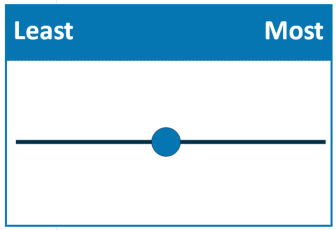
HFM Strategic Equity Positioning (Long Term)
While equities continued to move modestly higher in the third quarter, elevated valuations and persistent global headwinds continue to create risks tied to economic fragmentation, energy markets, and supply chain disruptions. The AI-driven investment theme has fueled capital deployment across nearly every sector, driving increasingly elevated growth expectations and helping to attract the $1.23 trillion that has flowed into US ETFs since the start of 2026. At the same time, several key economic indicators, including real GDP growth, have softened in recent quarters. Given the balance between strong market momentum and growing economic uncertainty, we remain cautiously NEUTRAL on equities.
HFM Tactical Equity Positioning (Short Term)
Large Cap
Large cap returns (S&P 500) have been up near 2% in Q3 and remain somewhat concentrated in certain sectors of the market, primarily technology and energy. We continue to see strong sales and earnings growth in the mega-cap names across several concentrated sectors, namely technology, communication, and energy. Valuations remain rich and much of the capital flow into the market remains very concentrated to AI. We remain NEUTRAL on this segment with careful selection on specific stocks and sectors.

Small Cap
Small caps have outperformed large caps in 2026 as investors have looked for diversification away from the AI driven megacaps and have been attracted to the lower valuations that small caps have offered. As noted previously, small caps are sensitive to interest rate moves. The Federal Reserve’s recent rate hike hampered this sector, and we’ve seen a retreat ever since. However, small caps remain fairly valued, and we continue to have a MORE favorable stance in this segment.

Cutting Edge
Trillions of dollars have flowed into AI and it’s virtually impossible to sidestep this segment given the widespread excitement around the reach and potential upside case for how AI shapes our world. We remain MORE favorable on the cutting edge segment.
International
International stocks have continued to outperform the S&P 500 this year, building on their strong results in 2025. Lower valuations and higher dividend income have contributed to their performance. However, global energy prices are elevated (particularly diesel) and changing economic levers were catalysts for the sharp drop in price movement late into Q3. We remain NEUTRAL on this segment.

Hedged Equity
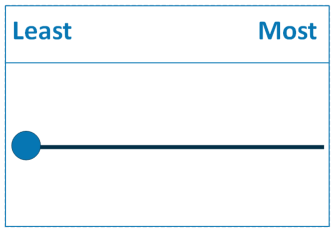
No additional news on this segment from previous posts. While a limited exposure in portfolios, the hedged equity exposure held up well (relative to the S&P 500) in Q3 given its reduced volatility mandate. We remain LEAST favorable in this segment.
Fixed Income/Bonds Favorability
HFM Strategic Fixed Income Positioning (Long Term)
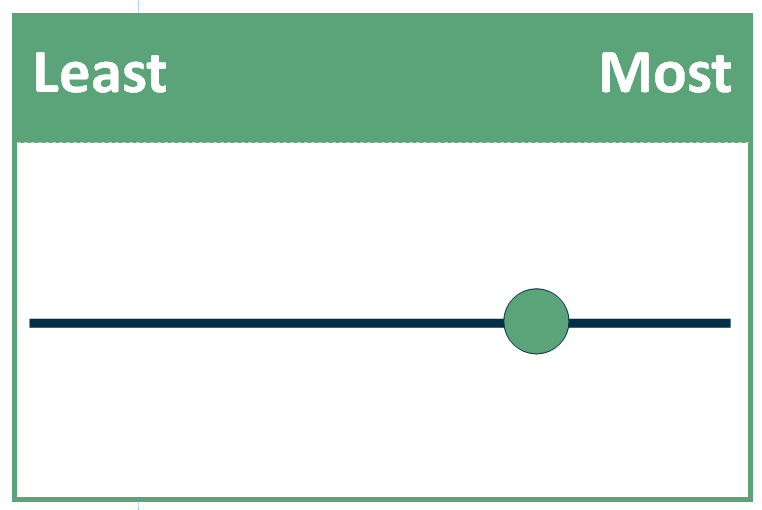
During Q3, the Federal Reserve transitioned decisively to a hawkish stance and increased the Federal Funds rate 25 basis points (bps), the first increase since rate cuts began two (2) years ago, prompted by persistently elevated inflation above the 2% target. Financial markets now expect as many as ~3 additional Fed Funds rate hikes by the end of 2027. US Treasury yields have risen ~90 bps from pre-Iran war levels, largely reflecting expected Fed Funds rate increases, a resilient economy, AI debt issuance and US deficits/debt. The yield for the Bloomberg US Fixed Income proxy has risen ~120 bps from pre-Iran war levels while YTD performance is minus 2.0%, driven by price declines from rising bond yields. Current yield levels remain attractive relative to the past 25 years and potentially provide solid income that can help offset the potential effects of price risk. Overall, we maintain a MORE favorable outlook on Fixed Income.
HFM Tactical Fixed Income Positioning (Short Term)
Investment Grade Bonds
The Investment Grade sector continues to offer compelling income earning potential with overall current yields approaching 6%, roughly 75 bps higher than the prior quarter-end level. However, strong credit fundamentals and investor demand have kept the portion of yield compensating for credit default, downgrade, and other risks at historically low levels despite the recent increase in US Treasury yields and spike in bond market volatility. Short and intermediate life Investment Grade sector investments may provide diversification, attractive income levels and mitigate potential price declines due to risk factors including the potential for higher US Treasury yields and economic volatility. We maintain a MORE favorable outlook on Investment Grade bonds.

High Yield
In our view, the High Yield sector continues to offer compelling income earning opportunity. However, spreads compensating for credit default, downgrade and other risks remain compressed despite higher US Treasury yields and bond market volatility, reflecting generally stable overall sector fundamentals and a solid economic backdrop. Nonetheless, attractive income earning potential is offered by higher quality fixed and floating rate High Yield investments, which can partially offset the effect of price declines stemming from increased credit risk attributable to broad factors such as economic deterioration and a higher-for-longer interest rate environment. Floating rate High Yield investments specifically can mitigate price declines associated with rising inflation and an accelerating economy. We maintain a bias for tactical allocations to higher quality, shorter maturity, favorably structured bonds and a LESS favorable outlook on the High Yield sector.
Alternatives Favorability
HFM Strategic Alternatives Positioning (Long Term)
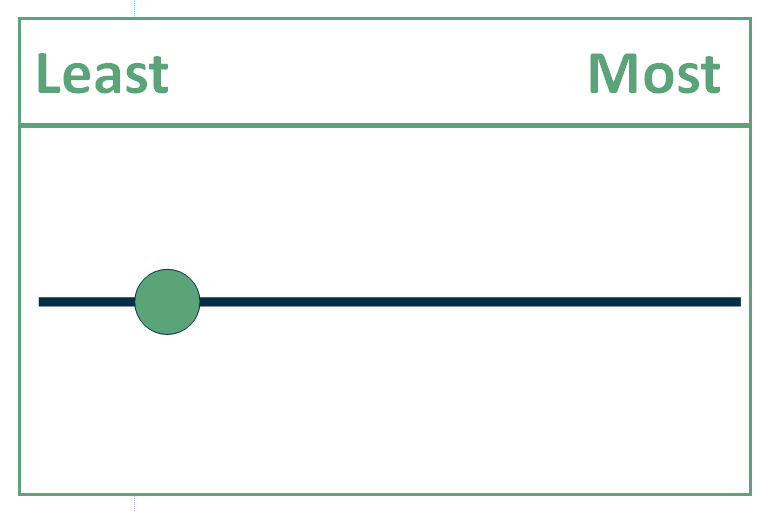
At the end of Q3, we believe our alternative sleeve continues to do its job of giving our portfolios a different source of potential return when traditional asset classes are not performing as well. Bonds have had a tougher time this year with the rise in interest rates. We remain MOST favorable on this segment.
